
Skip to content

Editors run on coffee and cookies.

Ours are the stats, ads and better-emails kind. Sorry, no chocolate chips. Privacy policy

Statistics

Google Analytics counts visits and sales.

Advertising

Google may use your visits for ads.

Personalised emails

Our emails follow what you look at here.

Start Your Professional Video Making Career

Turn your passion for video making into a full time career. Learn how to land your first client, negotiate and grow your video production business.
By Jordy Vandeput ★ 4.6 (23 reviews) 11 lessons 54m
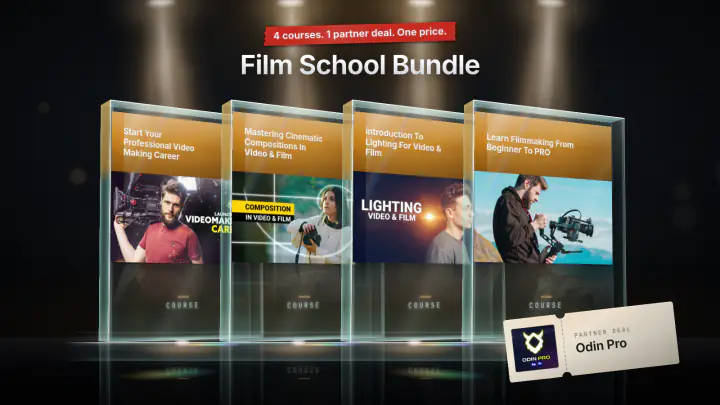
Save 70% Or take the bundle Film School Bundle 4 courses · 1 partner deal $159 $541.80 total value See the bundle
Trailer Cinecom
What you'll learn
  • Learn how to prepare yourself to deal with the commercial industry
  • Get into the film industry and work your way up to the big productions
  • Land your first client and build your video production business further
  • How to make a living and earn money with making videos
About this course

This course shows you how to earn a living with video: either as your own video production company that works for end clients, or as a freelancer hired by production companies, agencies and studios. You set a goal, build and price your services, protect yourself with a contract, find your first client and grow from there. It is made for beginners who have the creative skills and need the business side.

What you'll learn in this video business course

  • Choosing a goal: production company or freelancer, and which role (production, camera and sound, or post-production) you want to be known for.
  • Thinking like a business owner: advising the client, putting the client first, and talking about what a video does for their business instead of your gear.
  • Building three service packages (bronze, silver and gold) that a client understands without a gear list, and why you start with the most expensive one.
  • Pricing: working from a base hourly fee, adding equipment, converting it to half-day and day rates, and adding a commission when you hire a freelancer. Jordy works through the numbers using Belgian taxes and tells you to redo the maths for your own region.
  • Contract basics: day price and extra hours, included revisions, an upfront payment, a scheduled delivery date and usage rights.
  • Finding clients: business networking events for production companies, a portfolio and targeted emails for freelancers, and internships as a way into the film industry.
  • Landing a job: researching the client, touring their business, naming a price in the meeting and following up on the quote.
  • Running the production and edit: briefing the client during the shoot, collecting assets, handling drafts and revision rounds.
  • Growing: Google reviews, using clients as references, asking for introductions and staying in touch.

How the course is built

There are 11 lessons with a total runtime of about 54 minutes. Jordy talks you through each step in order, from the first goal to the second client, using examples from his own career: event videos, corporate videos, weddings and a BMW franchise as the example client. This is a talk-through course. There are no project files and no software to open.

Who this course is for

It is for you if you want to start a video production company, or want to work as a freelancer in the film industry, from camera operator or video editor to the crew of bigger productions. The two paths differ, and the lessons say which parts apply to which. The landing-a-job lesson, for example, mostly applies to people who run their own production company and deal with the end client directly.

It is not a filmmaking technique course. Jordy says he does not go into how to film or set up lights, and that sales technique is a topic for other courses. He also calls this course a guide that stays shallow, because running a business is learned through experience.

What you need

No software is taught or required. Come with a goal you are willing to think about: Jordy asks where you want to be in five years.
Lessons
11 lessons 54m 2 free previews
Jordy introduces himself, explains why the business side trips up creatives, and sets out what the course covers: finding clients, negotiating and landing a production as a freelancer or production company.
Choose your goal before your first client chooses it for you. Production company or freelancer, generalist or specialist, and how the size of your clients decides how narrow your skill set should be.
Why a video maker is a business even when working alone. Advise the client but let them decide, and pitch what a video does for their business, such as event footage, instead of your camera and lights.
Replace a long gear-based quote with bronze, silver and gold packages built from shooting and editing days, logo animation, 3D graphics and drone shots. Also covers day rates versus hourly fees for freelancers.
A worked pricing method: hourly wage, admin time and 60% tax give a $50 base fee, gear lifts it to $70, then half-day and day rates, package prices and the commission on hired freelancers.
The three things a simple contract should cover: fees for extra hours and revisions, an upfront payment with a fixed delivery date and invoice, and usage rights, with Jordy's story of a commercial ending up on national TV.
How to get known: networking events and business cards for production companies, a portfolio and a half-price first job for freelancers, and treating a film industry internship as a network event.
Follow one lead from a business card to a signed quote: research the company, tour their site, show interest, present the gold package first, name a price in the meeting and follow up.
What to arrange before and during the shoot: shot checklist, client preparation, briefing the client on set. Then asset collection, why not to send drafts, and how to state revisions in the delivery email.
Turn a happy first client into more work: ask for a Google review, use clients as references, request introductions with a script, and email past clients every three to six months.
Wrap-up of the course: prepare well and socialise, keep your five-year goal in mind, decline jobs that pull you away from it, and know that experience fills in what a course cannot.
Your instructor
Jordy Vandeput

Jordy Vandeput

Founder of Cinecom · 2.75M+ subscribers on YouTube

Jordy Vandeput is a Belgian filmmaker who has taught practical filmmaking to millions through Cinecom. He breaks professional techniques down into clear, repeatable steps you can use on your very next project.

Watch on YouTube
From the course
What students say
★ 4.6 · 23 reviews

Great information and a really great format. I would liked to have seen this 4 years ago! It would have helped me a lot. I love all of the content you guys create. Keep it up.

Kevin

Great course and teacher, I now have a document full of useful info and steps I can take to become a freelance video editor, thanks Jordy :)

Callum Mcinerney

Jordy! Thanks for a great class and for sharing your well-earned wisdom. This was a timely one for me and I appreciated it, especially the bits breaking down how to outline packages for the clients! Thanks for giving 110% of what you know and, as always, 188% of your enthusiasm. Cheers!

Johnny Michael

This course is well done on so many levels. The editing (of course), keeping the vids short and to the point (very efficient), it's entertaining, but also the focuses are just spot on and you can tell based from personal experiences. I'm feeling very inspired in this moment.

John

Couldn’t load more. Try again.
Questions
The course is listed for beginners. It starts from setting a goal and works up to landing your first client, and Jordy says he began as a freelancer straight out of film school with no business knowledge.
No. It covers the business side: goals, packages, pricing, contracts, finding clients, handling a job and growing. Jordy says he does not go into how to film or light a shoot, and points to other courses for that.
Yes. The lessons separate the two paths: a production company works with end clients and sells packages, while a freelancer works for production companies, agencies or studios and charges day or half-day rates.
Yes. Jordy builds hourly, half-day and day rates step by step and prices bronze, silver and gold packages. His numbers come from Belgium, including its taxes, so he tells you to redo the calculation for your own region.
No template or project files are listed. The contract lesson explains what to cover instead: fees for extra hours and revisions, an upfront payment with a delivery date, and usage rights. Jordy suggests a legal advisor for further clauses.
There are 11 lessons with a total runtime of about 54 minutes. No software is used in the lessons, so you only need a way to watch the videos.
Sign in to your Cinecom account and every lesson streams right away, on any device. You keep access for life, for as long as the course stays in our catalogue.
One time. You pay once and keep lifetime access. There is no recurring subscription.
No. Lessons stream from your account. When a course comes with project files, you download those from the course page in your account.
No. When a course teaches a program, the course page shows which one, and you need your own copy.
Yes, you can sign in on your phone, tablet or computer. Your account is personal, and signing in on several devices at the same time can end your other sessions.
Yes. Paddle, our reseller, runs the checkout, charges any VAT or sales tax and sends you the invoice.
No. Our courses do not come with a certificate.
Watch the free preview lessons and browse the full lesson list before you buy. Every lesson unlocks the moment you enrol, so purchases are final. This never affects your statutory rights if a course is faulty or not as described: email [email protected] and we will help.
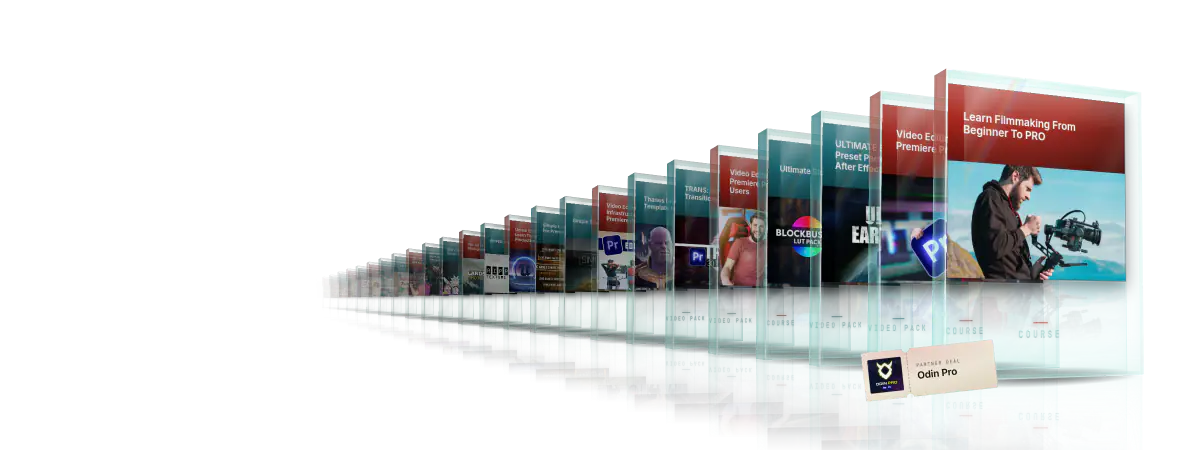
Cinecom Complete Bundle

Every course. Every pack. One price.

  • 14 courses
  • 24 video packs
  • 1 partner deal
  • Every future release
$197 Total value: $1,704.70 Save 88%