

Skip to content

Editors run on coffee and cookies.

Ours are the stats, ads and better-emails kind. Sorry, no chocolate chips. Privacy policy

Statistics

Google Analytics counts visits and sales.

Advertising

Google may use your visits for ads.

Personalised emails

Our emails follow what you look at here.

Unreal Engine 5 Unreal Engine 5

Unreal Engine 5 For Beginners: Learn The Basics Of Virtual Production

Learn the basics of Unreal Engine 5 in this beginners course. With a focus on Virtual Production, learn to create cinematic scenes.
By Jordy Vandeput ★ 4.9 (70 reviews) 25 lessons 4h 59m Project files included
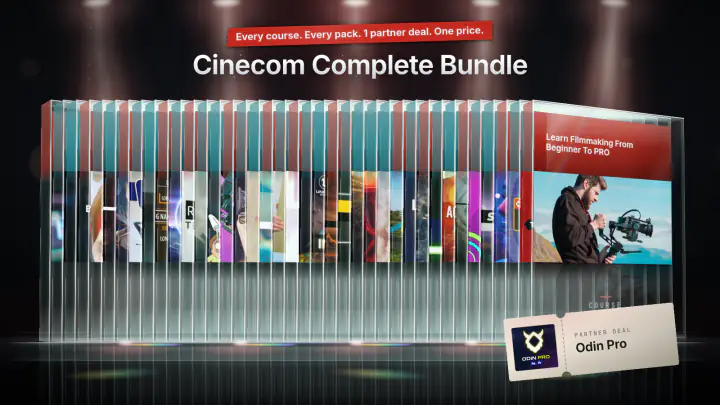
Save 88% Or take everything Cinecom Complete Bundle 14 courses · 24 video packs · 1 partner deal $197 $1,704.70 total value See the bundle
Trailer Cinecom
What you'll learn
  • Create a realistic landscape
  • Control the atmosphere, fog and sun
  • Design an interior set
  • Animate and track camera motion
  • Create a Metahuman
  • Chroma Keying inside UE5
  • Controlling DMX Lights
  • Movie rendering
About this course

This course teaches you the basics of Unreal Engine 5 for filmmaking and virtual production, starting from an empty project. You build an outdoor landscape and an old saloon interior, light them, film them with animated virtual cameras and render the result as a movie. It is for filmmakers, VFX artists and content creators who want cinematic renders or a first step into virtual production. Game development is not the focus.

What you'll learn in this Unreal Engine 5 course

The basics. Start a blank project for film and video with the starter content, move around the viewport, and learn the Outliner, the Details panel and the Content Browser. Move, rotate and scale actors with snapping grids, build a wall from a cube, and apply materials and lights.

Outdoor scenes.

  • Build an atmosphere from a directional light, Sky Atmosphere, Skylight, Volumetric Clouds and Exponential Height Fog, then save it as a reusable Blueprint.
  • Sculpt a landscape, or import a PNG height map, and give it a material.
  • Download free assets from Quixel Bridge: paint grass and flowers with the foliage tool and turn on wind, add Nanite rocks and decals, and bring in trees from the Epic marketplace.
  • Remove what the camera never sees, and stack rocks to hide the landscape surface.
  • Give the scene a look with volumetric fog, god rays from light shaft bloom, and a post-process volume (bloom, exposure, chromatic aberration, color grading, film grain).

Interior scenes.

  • Block out a hollow studio from geometry boxes, cut windows with a subtractive box, and turn the result into a static mesh so sunlight stays outside.
  • Dress a saloon with Quixel assets, dirt decals, a floor material set per surface, and photos in picture frames.
  • Light it with spot lights and a rectangle light, build an emissive material for the bulbs, soften shadows, and mix color temperatures for contrast.
  • Understand why Lumen puts red crosses on lights, and how to fix it with static lights and a lighting build.

Characters, cameras and virtual production.

  • Create a MetaHuman, import it into your scene, and drive its face and head from your iPhone with the Live Link Face app.
  • Place Cine Camera Actors, set lens, aperture and focus, and animate three cameras with camera cuts in the Level Sequencer.
  • Track a virtual camera with your iPhone and record it with the Take Recorder.
  • Key a green screen shot inside Unreal Engine with Composure, from an mp4 file and from a live feed.
  • Control a virtual light from real DMX lighting over Art-Net.
  • Render with the Movie Render Queue: Apple ProRes or EXR, anti-aliasing and warm-up settings, 4K output.

How the course is built

There are 25 lessons with a total runtime of 5 hours. Most lessons end with something for you to practice before the next one, such as arranging chairs and a table in the first scene, or playing with the sky atmosphere settings. The last lesson asks you to build your own landscape or interior, add virtual cameras and keyframes, and render three or four shots as a level sequence.

The project files come as a split zip archive in 9 parts, about 17 GB in total. Jordy says in the lessons that the project holds a separate level for each lesson, so you can open the level that matches where you are.

Who this course is for

This is a beginner course. You do not need any Unreal Engine knowledge, and a basic understanding of video editing helps. It suits you if you want to make cinematic renders, or if you want to learn how virtual production tools like camera tracking, chroma keying and DMX lighting work.

It is not a 3D modeling course. Jordy points out that Unreal Engine is not modeling software, so you build scenes from free Quixel assets and the shapes built into the engine. The iPhone tracking is a hobby setup, and he says it is not what professional studios use. The DMX lesson is aimed at people who already know DMX, and he suggests skipping it if you do not.

What you need

  • Unreal Engine 5, installed through the Epic Games launcher, and an Epic Games account (used to sign in to Quixel Bridge).
  • A computer that can run the engine. Jordy works on a fast machine and shows how to lower the scalability setting if yours struggles. He also warns that MetaHuman is heavy on your computer.
  • An iPhone for the face capture and camera tracking lessons. Jordy says the Live Link Face app only works with iPhone.
  • For the live chroma key lesson, a camera, a capture device (he uses a Cam Link) and a green screen. For the DMX lesson, DMX lights and a network.

Lessons
25 lessons 4h 59m 3 free previews
Jordy sets out the class: outdoor landscapes, an interior scene with lighting, virtual cameras animated into a movie, live green keying, iPhone tracking and DMX lights. The goal is using Unreal Engine for filmmaking, not games.
Start a blank Film and Video project with starter content, then learn viewport navigation, the Outliner, Details panel and Content Drawer. Place a chair, move, rotate and scale it with widgets, set snapping grids and duplicate with Alt.
Build a brick wall from a cube, apply a starter-content material, and add a wall light with a point light inside it. Group actors into folders, switch top and unlit views, and lower scalability on slower machines.
Create a new level and build outdoor lighting from a directional light, Sky Atmosphere, Skylight, Volumetric Clouds and Exponential Height Fog. Then bundle it all into a Custom Atmosphere Blueprint you can reuse in other levels.
Switch to Landscape mode and sculpt mountains with the sculpt, smooth, erosion and ramp tools, or import a PNG height map instead. Then apply the grass material through the landscape material property.
Download wild grass and flowers from Quixel Bridge, paint them over the landscape with the foliage brush, randomize their scale, erase patches, and switch on wind in each foliage material and its billboard version.
Bring in Nanite rocks, branches and leaf decals from Quixel Bridge, view Nanite triangles, and see why an imported guitar arrives without materials. Add Megascans trees from the Epic marketplace and switch their leaves to winter.
Create a Cine Camera Actor from your viewport, erase foliage outside the frame to save performance, and thin out the grass edge. Stack Megascans rocks to hide the landscape surface, and paint foliage on top of them.
Style the outdoor scene with volumetric fog color and scattering, light shaft bloom for god rays, and a post-process volume with infinite extent: bloom, manual exposure, chromatic aberration, color grading, a LUT slot and film grain.
Download interior assets and decals from Quixel for a saloon, filter the Content Browser by static mesh and material instance, then build a hollow studio from a geometry box and cut a window with a subtractive box.
Assemble the saloon from wall pieces, a window, a modular bar, bottles, mismatched chairs and a table. Set the floor material per surface, add a balcony wall from box geometry, and fix a pivot with Set as Pivot Offset.
A tour of the finished saloon: varied rotations on barrels, cups and chairs, and billboard decals for dirt in the corners, with Receives Decals switched off where they stretch. Then import photos and attach them to picture frames.
Open the MetaHuman presets, start MetaHuman Creator in the browser and customize skin, eyes, makeup and hair. Import the character into the saloon and see how level of detail (LOD) hides the hair at a distance.
Enable the Live Link and Live Link Control Rig plugins, connect the iPhone Live Link Face app by IP address, and drive the MetaHuman's face and head. Also covers simulation versus editor mode, and collision and physics on a chair.
Turn the studio geometry into a static mesh to block sunlight, then light the saloon: a spot light in a fixture, a manual-exposure post-process volume, an emissive bulb material, and a rectangle light with cylinder tubes for a fluorescent fixture.
Soften shadows with source radius and source angle, add fog extinction scale and emissive color, and mix color temperatures of 2,300, 2,800 and 3,800. Learn why Lumen puts red crosses on lights, and how static mobility removes them.
Create Cine Camera Actors with Create Camera Here, pin the preview, and view through several cameras in a multi-viewport layout or on a second monitor. Set film back, lens, aperture and focus tracking, plus per-camera bloom and lens flares.
Build a Level Sequence with three cameras, set camera cuts between a balcony, stairs and table shot, and keyframe transforms and focal length for a dramatic zoom. Also animate an ashtray so it floats up and rotates.
Use the iPhone Live Link VCam app and a Virtual Camera 2 actor to film handheld, following the floating ashtray. Covers the Message Bus Source, Take Recorder, focus tracking and hiding the on-screen interface before rendering.
Load a green screen mp4 through a Media Player and Media Texture, then composite it over the saloon with Composure. Pick the key color, tune the pre-blur kernel, and build a post-process material with an Over node.
Swap the offline clip for a live feed from a Cam Link 4K capture device, re-key the green in the Composure media plate, and see why matching your studio lighting to the virtual scene is the practical use of this setup.
Enable the DMX plugins, set Art-Net input and output, define a DMX library with a fixture type and patch it to a channel, then drop a static light fixture into the saloon and control it from an iPad.
Combine a tracked virtual camera, a marked focus spot and DMX lighting. Record the camera and the DMX library with Take Recorder while a real camera films, using a bump of the camera as a sync point.
Render level sequences with the Movie Render Queue: choose Apple ProRes or EXR, set anti-aliasing temporal samples, keep warm-up and camera-cut warm-up on, then set 4K output, a custom frame rate and a saved preset.
Review the three rendered sequences, including the honest result of the iPhone-tracked green screen shot. Then comes the final assignment: build a landscape or interior, add cameras and keyframes, and render three or four shots.
Your instructor
Jordy Vandeput

Jordy Vandeput

Founder of Cinecom · 2.75M+ subscribers on YouTube

Jordy Vandeput is a Belgian filmmaker who has taught practical filmmaking to millions through Cinecom. He breaks professional techniques down into clear, repeatable steps you can use on your very next project.

Watch on YouTube
From the course
What students say
★ 4.9 · 70 reviews

honestly i always struggled with the pacing of many YouTube tutorials regarding After Effects, Premiere and Unreal Engine, but found the pacing, content and useful show cases of the things been shown in the course to be extremely useful and informative. Now i understand better so many things (specially from Unreal) that even allowed me to expand my CV and gave me the tools I needed for the career change I've been looking for

Manuel Antonio Fernandez

All the courses are very accessible. It doesn't hurt that they are also very entertaining.

Guðmundur Karl Karlsson

one of the best courses I have watched.

Shiva Keswani

Great class. The last few lessons were a bit advanced for a total neophyte (me), but still, overall, great.

Len Vlahos

Couldn’t load more. Try again.
Questions
No. The course is for beginners and begins by opening Unreal Engine from the Epic Games launcher and creating a blank project. No pre-knowledge is needed, though a basic understanding of video editing is useful.
It is taught in Unreal Engine 5. Jordy does not give an exact version number. He says during the lessons that MetaHuman, Composure and the iPhone camera tracking were new and buggy while recording, and he shows workarounds.
Yes. The course lists project files as a split zip archive of 9 files, about 17 GB in total. Jordy says the project has a level for each lesson, so you can open the one that matches the lesson you are watching.
An outdoor landscape with foliage and rocks, a saloon interior with lighting, a MetaHuman, a level sequence with three animated cameras, a green screen shot keyed into the scene, and rendered movies. Jordy also gives you a final assignment to build and render your own scene.
Only for those lessons. Face capture and camera tracking use iPhone apps, and Jordy says the Live Link Face app only works with iPhone. The live chroma key lesson uses a camera, a Cam Link and a green screen, and the DMX lesson uses real DMX lights.
The course gives no minimum specs. Jordy works on a fast computer and shows how to lower the scalability setting if yours struggles. He warns that MetaHuman is demanding and that it is fine to only watch that lesson.
No. It focuses on film, virtual production and 3D animation. Jordy starts a blank project for film and video instead of games, and the course ends with rendering a movie.
Sign in to your Cinecom account and every lesson streams right away, on any device. You keep access for life, for as long as the course stays in our catalogue.
One time. You pay once and keep lifetime access. There is no recurring subscription.
No. Lessons stream from your account. When a course comes with project files, you download those from the course page in your account.
No. When a course teaches a program, the course page shows which one, and you need your own copy.
Yes, you can sign in on your phone, tablet or computer. Your account is personal, and signing in on several devices at the same time can end your other sessions.
Yes. Paddle, our reseller, runs the checkout, charges any VAT or sales tax and sends you the invoice.
No. Our courses do not come with a certificate.
Watch the free preview lessons and browse the full lesson list before you buy. Every lesson unlocks the moment you enrol, so purchases are final. This never affects your statutory rights if a course is faulty or not as described: email [email protected] and we will help.
Cinecom Complete Bundle

Every course. Every pack. One price.

  • 14 courses
  • 24 video packs
  • 1 partner deal
  • Every future release
$197 Total value: $1,704.70 Save 88%